



Peter Saville’s Factory Life
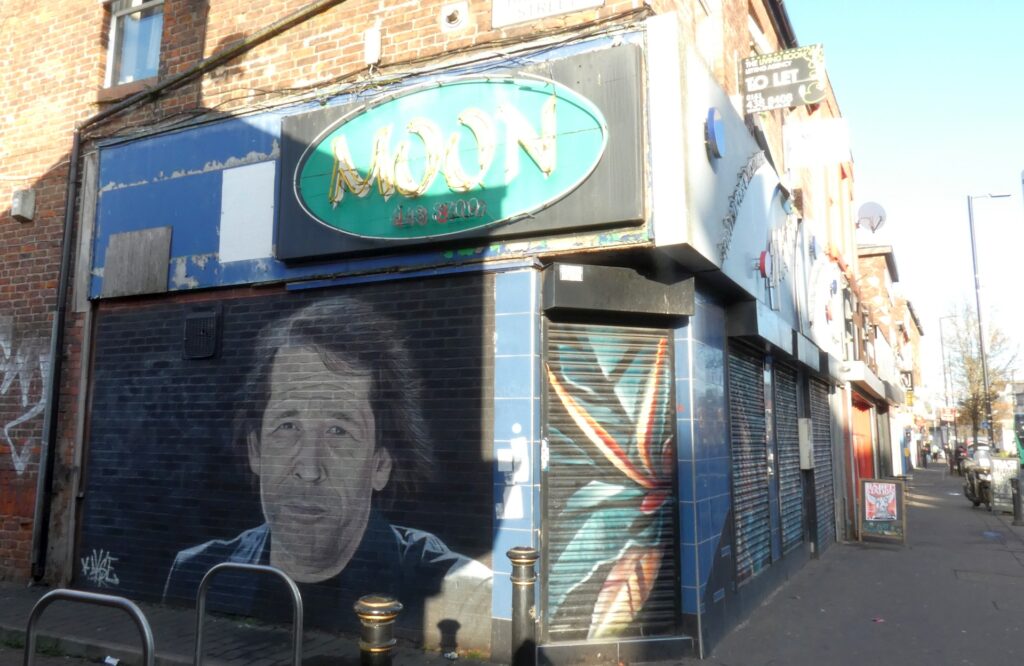
“Ian’s death was an unbelievable marketing campaign,” according to one of the speakers at the recent launch of the revised edition of Shadowplayers: The Rise and Fall of Factory Records by James Nice (Faber). James was on a panel which also included Peter Saville, the graphic designer who co-founded Factory Records with TV presenter Tony Wilson in 1978, and Lesley Gilbert, widow of Rob Gretton, manager of Joy Division. Ian, of course, refers to Ian Curtis, the Joy Division singer and songwriter who committed suicide in 1980, shortly before the release of their second album, Closer, and epic single ‘Love Will Tear Us Apart‘.
The subsequent flood of recorded material that has appeared ever since indicates the quote might sound cynical but is also true, while the same could also be applied to New Order, the band which rose out of JD’s ashes.
Factory Records was originally based in the living room of a two-bedroom flat at 86 Palatine Road, West Didsbury in South Manchester. It belonged to Alan Erasmus, a friend of Wilson’s who had introduced him to the Russell Club which hosted Factory indie act nights. Erasmus therefore became a partner in the new label although Lesley was the only one receiving a salary. She was already a trained secretary and bookkeeper so it only seemed fair for her to receive what had been earned from previous employers.
As far as the partnership was concerned there was a five-way split between the aforementioned three plus Gretton who had to give up his work as a concert promoter and DJ at punk club Rafters. Wilson was allocated 40 per cent of the shares since his TV face was worth its weight in free publicity. Having fronted the cult TV series So It Goes for Granada – on which the Sex Pistols made their screen debut – Tony went on to present an early evening report slot for this northern branch of ITV, granting him the opportunity to publicise his other Mancunian ventures.
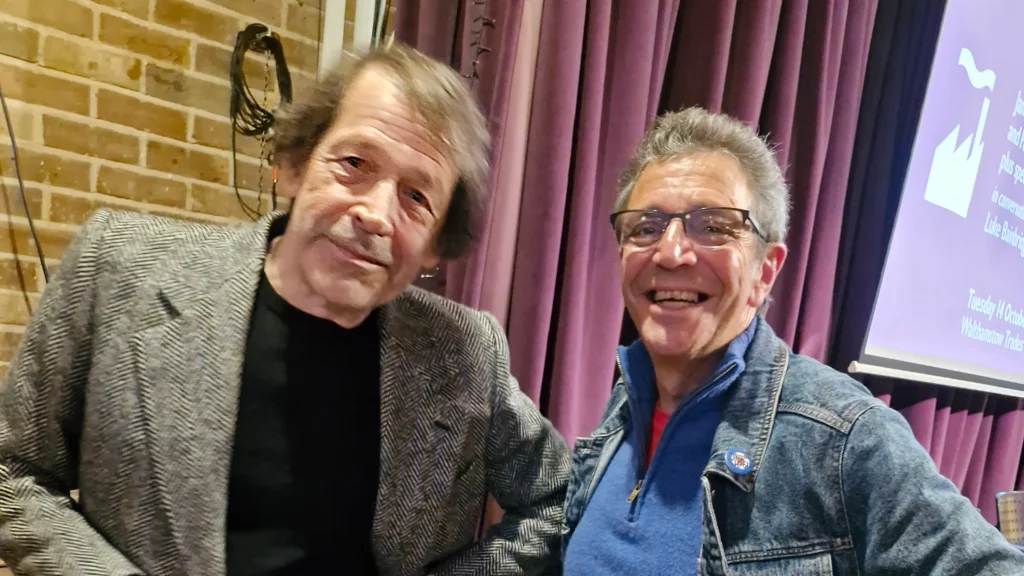
Saville, still an art student at Manchester Poly when he designed the posters for the first month of Factory nights, eventually talked Wilson into giving him five per cent of his additional 20 – not that money was ever the point of the whole enterprise.
“Putting out records seemed to be the appropriate thing to do, it was of its time,” Peter explained at the launch at the Walthamstow Rock ‘n’ Roll Book Club recently. “I’d done the posters and wanted to move on and create the artwork for a record sleeve, be part of the scene which included new indie labels in other parts of the country. None of us really had a managerial or entrepreneurial mindset, not even Tony who was just an employee of Granada, albeit a well-paid one.”
So 1979 dawned with A Factory Sample, an EP featuring Salford’s Joy Division, Sheffield’s arty Cabaret Voltaire, Manchester’s Durutti Column and one or two others. Durutti were the brainchild of the incredibly talented guitarist Vini Reilly who went on to shine on Viva Hate!, Morrissey’s first post-Smiths solo album as well as playing with numerous late ’80s groups like pop/dance trio Swing Out Sister.
“We managed to sell 5,000 copies of A Factory Sample (whose sleeve was adorned with a factory worker in modern day safety kit, arguably kicking off the post-punk ‘industrial’ scene),” Saville went on, “and used the money to press up more. Then came the first Joy Division album which did really well but no-one knew what to do with the money especially after the success of Closer and the first few New Order albums.
“Basically we were all fans competing in an industry which was all about money. In contrast Factory was supposed to be a springboard for artists to get deals with major labels but it wasn’t as straightforward as that. If Ian hadn’t died I think he would have been broken by the business. As it happens most of us were, especially after we opened the Hacienda in 1982, the former boat showroom which became one of the most infamous nightclubs and music venues of the late 20th century.”
Much has been written about the place, notably in JD/New Order’s Peter Hook’s autobiographical How Not To Run A Club (Pocket Books) which details the rise and fall of the club largely subsidised by his bands’ record sales. As one part of indie turned into acid house, Manchester descended into Gunchester and the ‘Hac’ became the local hub for ’90s gangs, drug-dealing bouncers and a hostile police force. The financial damage destroyed everything Factory Records and its two main bands had built up – but that wasn’t all, as Peter warily reveals:
“Tony (who died in 2007) went about paying for all this mess by involving himself in injudicious property deals, like the building housing Factory’s Dry Bar. The property cost £200,000 but needed £600,000 spending on the roof, so for the first time Factory had to borrow money. This coincided with the early ’90s recession and interest rates were extortionate. We found ourselves in an entirely different game. I became insolvent and my flat was repossessed.”
Fortunately for Saville he also owned a studio in London’s now ultra-fashionable Clerkenwell on the east side of the inner city, having rented in trendy locations like Holland Park and Notting Hill on the west side of town. He told me this after the event, the two of us having grown up in the same Greater Manchester neighbourhood.
We hung out with the same crowd throughout our school years and then in 1977 he spotted me on the front row of our once fine city’s Free Trade Hall when Blondie were opening for Television. After which he swanned into the pub which was my second home and inquired, “Are you taking punk seriously?” It was one of the most important questions I’ve ever been asked and our social lives once again merged before becoming our parallel careers. We moved to London round about the same time and he often popped into the office where I wrote for Record Mirror, sometimes with records inside sleeves he had designed, especially early Factory product.
Meanwhile back at the book club he talked about his strange relationship co-director Alan Erasmus. “Throughout the Factory years we hardly ever met but had a moment together at Southern Cemetery after Tony’s funeral. In the past we’d fallen out because of my well-known inability to deliver artwork on time and after everything that went on things were never really the same with Tony.
“But in that moment I realised we had all started out as friends and that it was business which had got in the way. This was confirmed a few weeks ago when Alan turned up at my studio to wish me a happy 70th birthday. Only friends do that.”
What my old pal might have said, with the benefit of hindsight and to coin a phrase, is “business will drive you apart…”
***
0 Comments